


If a floor could talk, a school floor would have stories to tell. From thousands of footsteps each day to the occasional dropped lunch or dragged desk, it takes more wear than most commercial spaces.
That is why choosing commercial flooring for schools is not just about strength. It's about finding a solution that balances durability, safety, and ease of maintenance in a busy environment.
This guide explores the best flooring for schools in Australia, helping you compare options and choose what works best for each area.
Why choosing the right flooring for schools matters
Flooring in schools plays a much bigger role than most people expect. It affects safety, maintenance, noise levels, and even how comfortable a space feels for students and staff.
A poor flooring choice can lead to ongoing issues such as wear, damage, or difficult cleaning requirements. Over time, this increases maintenance costs and disrupts day-to-day operations.
On the other hand, the right flooring supports a smoother, safer environment. It reduces upkeep, improves durability, and helps create spaces that feel clean and functional.
Key requirements for school flooring
Every school environment is different, but there are a few core requirements that apply across almost all spaces.
These requirements are also reflected in Victorian school design standards. The Victorian School Building Authority states that school floor finishes should be suitable for the intended use, easy to clean and maintain, slip-resistant, free of trip hazards, and appropriate for heavy pedestrian traffic.
Durability and wear resistance
School flooring needs to handle constant use without showing signs of damage too quickly. High-traffic areas such as corridors and entry points should withstand heavy foot traffic and furniture movement without wearing down.
Safety and slip resistance
Safety is a priority in any school environment. Flooring should provide sufficient grip to reduce the risk of slips, particularly in areas where spills are common or where students move quickly between classes.
Ease of maintenance
School staff need flooring that is easy to clean and maintain. Surfaces that require minimal upkeep help reduce cleaning time and ongoing costs while keeping spaces presentable.
Acoustic performance
Noise control is often overlooked, but it plays an important role in learning environments. Flooring can help absorb sound and reduce noise levels, particularly in classrooms and large shared spaces.
Hygiene and cleanliness
Schools need flooring that supports hygiene standards. Surfaces should be easy to clean and stain-resistant, especially in areas such as cafeterias, bathrooms, and classrooms.
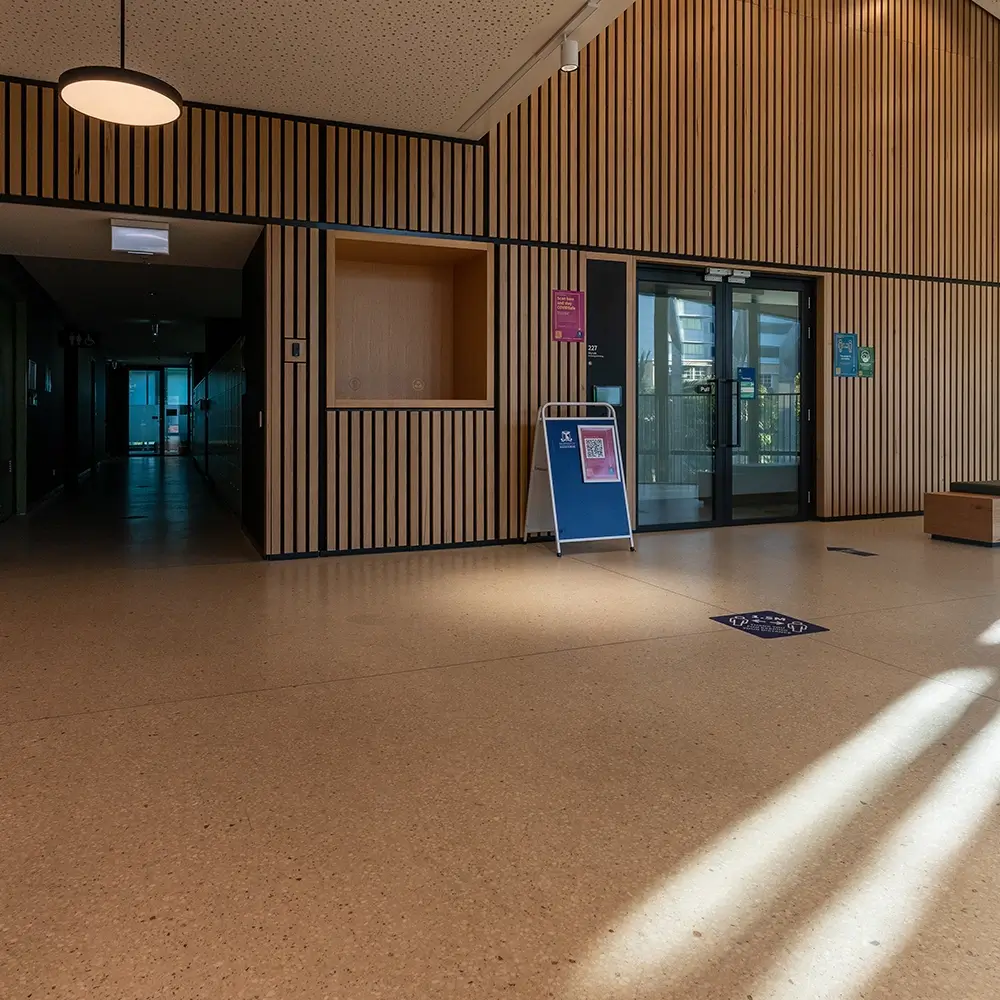
Top flooring options for schools
There are several types of flooring in schools, each suited to different environments and requirements.
Polished concrete flooring
Polished commercial concrete is becoming an increasingly popular choice for schools due to its durability and low maintenance.
It is particularly effective in high-traffic areas where long-term performance is critical. Because it is part of the slab itself, it does not peel or wear as surface coatings do.
Epoxy flooring
Epoxy flooring is commonly used in areas that require a sealed, durable surface. It performs well in spaces that need chemical resistance or easy cleaning.
However, because it is a coating, it may require maintenance or reapplication over time, especially in high-traffic areas.
Vinyl and LVT flooring
Vinyl and LVT are widely used in classrooms and administrative areas. They offer a softer feel underfoot and come in a variety of designs, making them a flexible option for learning spaces.
While they are comfortable and visually versatile, they may not perform as well as harder surfaces in high-traffic zones.
Rubber flooring
Rubber flooring is often used in gyms and play areas for its shock-absorption and safety benefits. It provides a softer surface that reduces impact, making it useful in spaces where physical activity occurs.
Carpet tiles
Carpet tiles are commonly used in classrooms and libraries where noise reduction is important. They help absorb sound and create a quieter learning environment.
However, they can be more difficult to maintain and may not be suitable for areas prone to spills or heavy traffic.
Polished Concrete vs other school flooring options
When comparing types of flooring in schools in Australia, polished concrete stands out for its balance of durability and low maintenance.
[table]
[thead]
[tr]
[th]Feature[/th]
[th]Polished Concrete[/th]
[th]Vinyl / LVT[/th]
[th]Epoxy[/th]
[th]Carpet Tiles[/th]
[/tr]
[/thead]
[tbody]
[tr]
[td]Durability[/td]
[td]Very high[/td]
[td]Moderate[/td]
[td]High[/td]
[td]Low[/td]
[/tr]
[tr]
[td]Maintenance[/td]
[td]Low[/td]
[td]Medium[/td]
[td]Medium[/td]
[td]High[/td]
[/tr]
[tr]
[td]Lifespan[/td]
[td]Very long[/td]
[td]Moderate[/td]
[td]Moderate[/td]
[td]Moderate[/td]
[/tr]
[tr]
[td]Suitability (traffic)[/td]
[td]Excellent[/td]
[td]Moderate[/td]
[td]Good[/td]
[td]Low[/td]
[/tr]
[/tbody]
[/table]
While other materials may suit specific areas, polished concrete is often the most reliable option for high-traffic zones.
Why polished concrete is ideal for schools
Polished concrete works well in school environments because it simplifies many of the challenges associated with flooring.
It is highly durable, easy to maintain, and performs consistently across a range of spaces. It also provides a clean, modern finish that suits both new builds and upgrades.
Key advantages:
- Handles high foot traffic without surface wear
- Requires minimal maintenance
- Seamless and easy to clean
- Long lifespan with consistent performance
Policrete specialises in delivering these types of high-performance finishes across commercial and educational environments.
Best flooring choices by area in a school
Different areas of a school serve different purposes, which means flooring needs to be selected based on how each space is used. A one-size-fits-all approach rarely works. The most effective school environments use a combination of flooring types to balance durability, safety, and comfort.
Classrooms
Classrooms need flooring that supports extended use while maintaining a comfortable, functional learning environment. Students and teachers spend hours in these spaces, so noise control, comfort, and durability are important.
Vinyl and carpet tiles are commonly used because they help reduce noise and create a softer feel underfoot. This can improve concentration and reduce disruption in busy classrooms. However, in schools prioritising low maintenance and long-term durability, polished concrete is increasingly being used, particularly in modern builds.
When choosing classroom flooring, it is important to consider:
- Noise levels and acoustic performance
- Ease of cleaning between classes
- Resistance to wear from desks and chairs
- Comfort for students and staff over long periods
Hallways and corridors
Corridors are some of the most demanding areas in any school. They experience constant foot traffic throughout the day, particularly during class changes and peak periods.
Flooring in these areas needs to be extremely durable and maintain its finish over time. It also needs to provide reliable slip resistance, as these spaces can become crowded and fast-moving.
Polished concrete is often the preferred solution in corridors because it handles heavy traffic without wearing down and requires minimal maintenance. Its seamless surface also reduces trip hazards and simplifies cleaning.
Gymnasiums and multipurpose spaces
Gymnasiums and multipurpose spaces place very different demands on flooring compared to standard learning areas. These environments require surfaces that can absorb impact, support physical activity, and provide grip.
Rubber flooring is commonly used because it offers shock absorption and reduces the risk of injury during sports and activities. In some multipurpose halls, flooring may need to accommodate both sports and events, which can influence the choice of material.
Key considerations include:
- Impact absorption and safety
- Durability under heavy equipment and movement
- Slip resistance during physical activity
- Flexibility for different uses of the space
Cafeterias and common areas
Cafeterias and shared spaces are high-traffic areas where spills, food waste, and constant movement are part of daily use. Flooring in these areas needs to be easy to clean, stain-resistant, and able to withstand wear without deteriorating.
Polished concrete is a strong option here because it provides a seamless, low-maintenance surface that can be cleaned quickly. Tile is also used in some cases, particularly where additional slip resistance is required.
The goal in these areas is to minimise cleaning effort while maintaining a safe and presentable environment.
Bathrooms and wet areas
Wet areas require flooring that can safely handle water exposure without becoming slippery or difficult to maintain. Hygiene is also a critical factor in these spaces.
Tile flooring is typically used because it is water-resistant and easy to clean. Slip-resistant finishes are often applied to reduce risk in areas where floors are frequently wet.
In these environments, flooring needs to meet strict practical requirements rather than aesthetic preferences. Durability, safety, and hygiene should always be the priority.

Maintenance requirements for school flooring
Maintenance is an ongoing consideration for any school. Flooring that requires less upkeep helps reduce costs and keeps spaces functional.
Daily cleaning is essential to remove dirt and debris, while periodic inspections help identify any issues early. One advantage of polished concrete is that it simplifies maintenance. With no coatings or joints, it is easier to clean and maintain compared to other materials.
How to choose the right flooring for your school?
Choosing the best flooring for schools involves understanding how each space will be used.
Consider factors such as traffic levels, cleaning requirements, safety, and long-term costs. A solution that works well in one area may not be suitable for another.
Taking a practical, use-case approach helps ensure the flooring meets the school's needs over time.
Working with a specialist commercial flooring contractor
Working with a specialist contractor ensures the flooring is designed and installed to meet the school's specific requirements.
A specialist can provide guidance on material selection, preparation, and finishes, helping to avoid costly mistakes and ensure long-term performance.


