


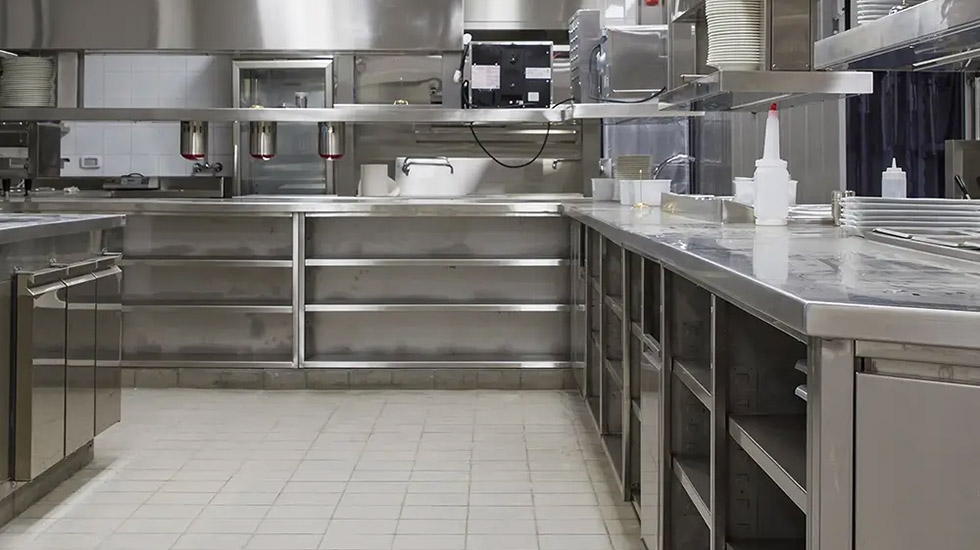

In a commercial kitchen, the floor takes just as much pressure as the people working on it. Heat, grease, water, and heavy equipment all hit the surface at once, every single day.
That is why choosing flooring for a commercial kitchen is not just a design decision. It is a performance decision that impacts safety, hygiene, and day-to-day operations.
This guide explores the best commercial kitchen flooring options and helps you choose the right solution for your space.
Why flooring matters in commercial kitchens
Flooring in a commercial kitchen does more than support foot traffic. It plays a critical role in safety, cleanliness, and efficiency.
In Victoria, commercial kitchens must operate in line with strict food safety regulations under the Food Act 1984 and national food standards. This makes it essential to choose flooring that supports hygiene, safety, and easy cleaning from the outset.
A poor flooring choice can quickly lead to issues such as slips, difficult cleaning, or surface damage. In a busy kitchen, these problems can disrupt operations and increase risk for staff.
The right flooring, on the other hand, helps create a safer and more manageable workspace.
Key requirements for commercial kitchen flooring
Commercial kitchens have strict performance requirements, and flooring must meet all of them simultaneously. It is not enough for a floor to perform well in one area.
Slip resistance and safety
Kitchens are high-risk environments for slips due to water, oil, and food spills. Flooring must provide a reliable grip, even when wet, to reduce the risk of accidents.
This often involves selecting the right surface texture or adding slip-resistant finishes that improve traction without making the floor difficult to clean. The goal is to create a surface that allows staff to move confidently, even during busy service periods.
Durability under heavy use
From foot traffic to heavy appliances, kitchen floors take constant wear and tear. The surface needs to handle this pressure without cracking, wearing down, or becoming uneven.
In addition to foot traffic, flooring must also support the movement of equipment such as trolleys and commercial kitchen units. A durable surface helps prevent damage that could lead to costly repairs or operational disruptions.
Resistance to heat, chemicals and moisture
Commercial kitchens are exposed to high temperatures, cleaning chemicals, and constant moisture. Flooring must withstand all of these without degrading.
Hot liquids, grease, and harsh cleaning agents can quickly break down unsuitable materials. Choosing a floor that resists these elements ensures it maintains its performance and appearance over time.
Hygiene and easy cleaning
Cleanliness is essential in any kitchen. Flooring should be seamless or easy to clean, with minimal joints where dirt or bacteria can build up.
Difficult-to-clean surfaces can slow daily operations and increase the risk of contamination. A well-designed flooring system supports fast, efficient cleaning while maintaining hygiene standards.
Compliance with health and safety standards
Flooring must meet relevant safety and hygiene standards. This includes slip resistance and suitability for food preparation environments.
Compliance is not just a requirement. It helps ensure the space operates safely and avoids potential issues during inspections. Choosing the right flooring from the start reduces the risk of needing costly changes later.
Best flooring options for commercial kitchens
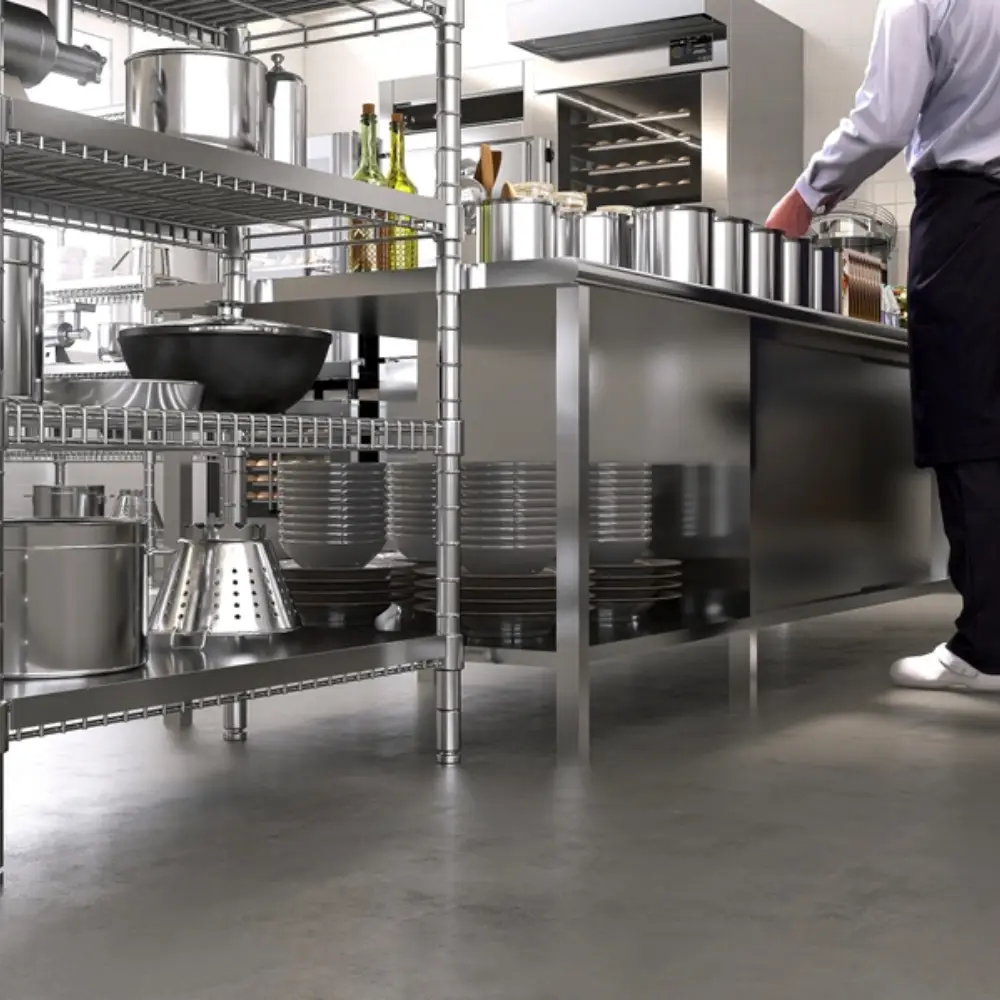
There are several commercial kitchen flooring ideas that perform well in demanding environments. Each option has its own strengths depending on how the kitchen operates.
Epoxy flooring
Epoxy flooring is one of the most common choices for commercial kitchens. It creates a seamless, sealed surface that resists moisture, stains, and chemicals.
It can also be customised with slip-resistant finishes, making it well-suited to busy kitchen environments where safety is critical.
Polished concrete flooring
Polished commercial concrete offers a durable and low-maintenance option for kitchens, particularly in areas with less exposure to constant moisture.
It provides a clean, modern finish and performs well under heavy use. With the right treatment, it can also be adapted to improve slip resistance.
Polyurethane cement flooring
Polyurethane cement flooring is designed for extreme environments. It handles high temperatures, heavy loads, and aggressive cleaning processes, making it suitable for industrial-scale kitchens.
It is often used in environments where durability and resistance are the highest priorities.
Quarry tiles
Quarry tiles are a traditional option in commercial kitchens. They offer good slip resistance and durability, particularly in wet areas.
However, grout lines may require ongoing maintenance and cleaning, increasing long-term upkeep.
Why epoxy flooring is a popular choice for commercial kitchens
Epoxy flooring remains a leading choice because it meets many key requirements in a single system.
It creates a seamless surface that is easy to clean, spill-resistant, and durable under heavy use. Slip-resistant additives can also be incorporated to improve safety without compromising performance.
For many kitchens, epoxy provides a practical balance between cost, durability, and hygiene.
Polished concrete vs epoxy for kitchen environments
Polished concrete and epoxy are often compared when selecting the best flooring for a commercial kitchen.
[table]
[thead]
[tr]
[th]Feature[/th]
[th]Polished Concrete[/th]
[th]Epoxy Flooring[/th]
[/tr]
[/thead]
[tbody]
[tr]
[td]Durability[/td]
[td]Very high[/td]
[td]High[/td]
[/tr]
[tr]
[td]Moisture resistance[/td]
[td]Moderate[/td]
[td]High[/td]
[/tr]
[tr]
[td]Maintenance[/td]
[td]Low[/td]
[td]Medium[/td]
[/tr]
[tr]
[td]Slip resistance[/td]
[td]Moderate[/td]
[td]High (customisable)[/td]
[/tr]
[/tbody]
[/table]
Epoxy is generally preferred in areas with frequent spills and moisture, while polished concrete can be effective in adjacent or lower-risk zones.
Choosing the right finish for safety and performance
The finish of the floor can be just as important as the material itself.
Slip resistance can be adjusted through texture and additives, allowing the floor to be tailored to the level of risk in the space. A smoother finish may be suitable for low-risk areas, while a more textured surface is often required in high-risk zones.
Balancing safety with cleanability is key. A surface that is too rough can become difficult to clean, while one that is too smooth may increase slip risk.
Common mistakes to avoid when selecting kitchen flooring
Choosing the wrong flooring can lead to ongoing issues that are difficult and costly to fix.
Some common mistakes include:
- Prioritising cost over performance
- Choosing finishes that are not suited to wet environments
- Overlooking slip resistance requirements
- Not considering long-term maintenance needs
Avoiding these mistakes starts with understanding how the kitchen will operate day to day.
Maintenance tips for commercial kitchen floors
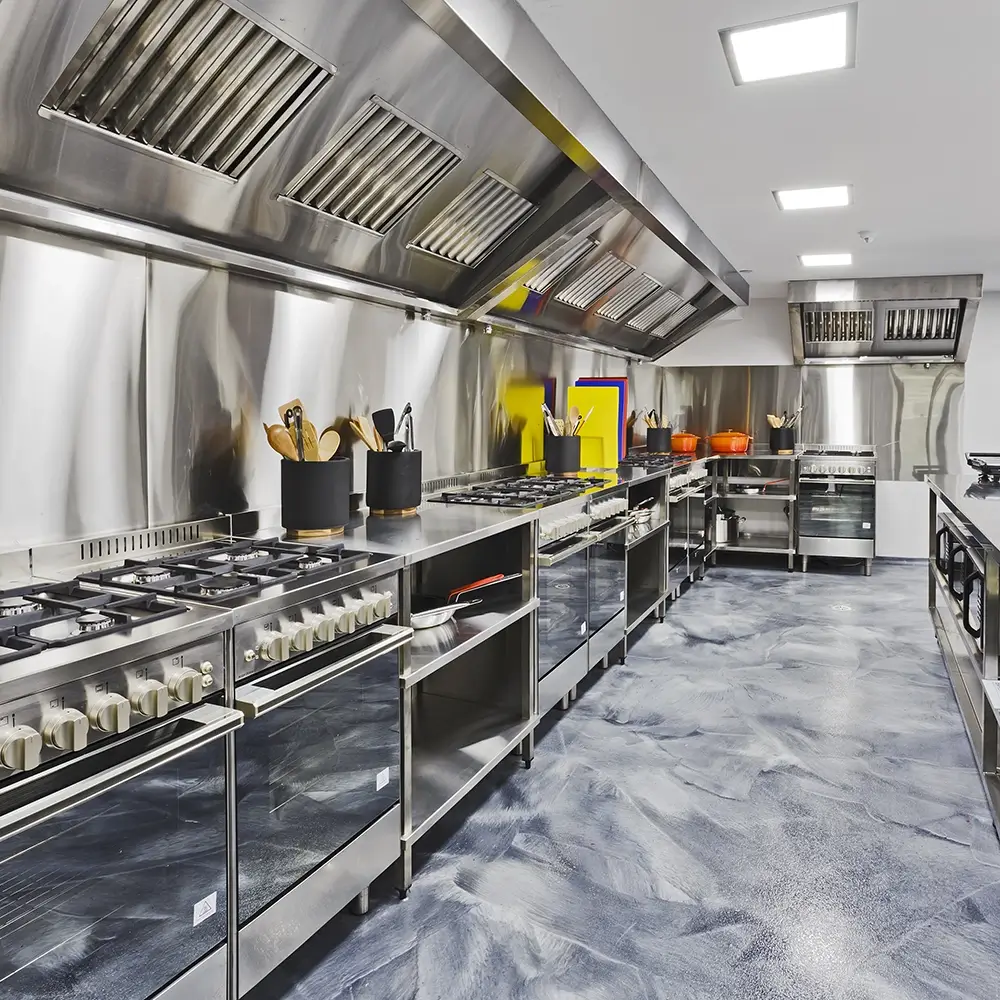
Proper maintenance helps extend the life of the flooring and keeps the kitchen safe and compliant.
Daily cleaning is essential to remove grease, food waste, and moisture. Regular inspections can help identify early signs of wear or damage.
Using the right cleaning products is also important, as harsh chemicals can affect certain flooring systems over time.
How to choose the right flooring for your kitchen setup
Every commercial kitchen is different, so the best solution depends on how the space is used.
Consider factors such as:
- Volume of foot traffic
- Exposure to moisture and heat
- Cleaning routines and requirements
- Safety considerations
Matching the flooring to the kitchen's specific needs helps ensure long-term performance.
Working with a specialist commercial flooring contractor
A specialist contractor can help you choose the right system and ensure it is installed correctly.
They will assess your space, recommend suitable materials, and deliver a finish that meets both performance and compliance requirements.


