


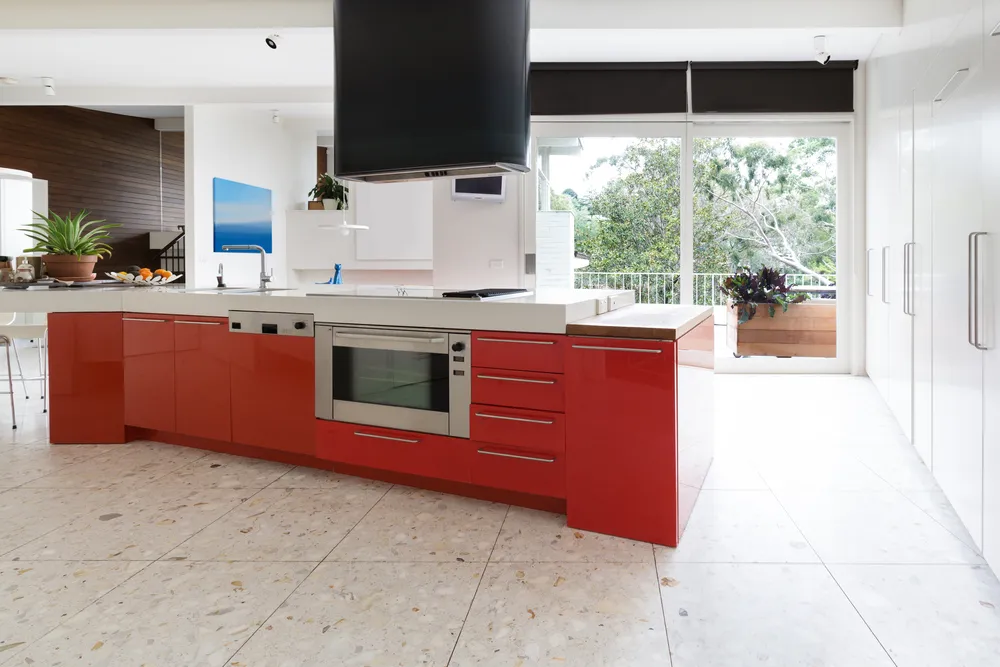

Terrazzo tiles have been a favourite in interior design for centuries, known for their unique look, durability, and versatility. But what exactly are terrazzo tiles, and why have they remained so popular?
In this comprehensive guide, we'll explore terrazzo's history, composition, benefits, and uses, helping you decide whether it is the best material for your next building project.
What are terrazzo tiles and how are they made?
Terrazzo tiles are a composite flooring material made by combining natural aggregates with a cement or resin binder. This mix creates a durable, low-maintenance surface known for its distinctive speckled design and long lifespan.
The composition of terrazzo tiles typically includes:
- Aggregates: Marble chips, quartz, granite, glass or stone pieces that form the visible pattern. These vary in size, colour and finish, giving each terrazzo tile a unique look.
- Binders: Cement-based or epoxy resin binders hold the aggregates together. Cement is the traditional option, while resin allows for brighter colours and a more seamless finish.
- Pigments: Added to the binder to create a wide range of base colours, from classic grey tones to more modern, design-driven finishes.
During manufacturing, the mix is poured into moulds, compacted, cured and then polished to achieve a smooth, durable surface. The result is a versatile flooring material suitable for both residential and commercial spaces, including kitchens, bathrooms and high-traffic areas.
What is the history and evolution of terrazzo tiles?
Terrazzo tiles have a long history, with early forms dating back to ancient construction methods. However, terrazzo as we know it today originated in Venice, Italy, during the Renaissance.
Venetian workers reused leftover marble chips from larger projects, embedding them in clay to create a practical, affordable flooring material. This early form of Venetian terrazzo was then ground and polished to achieve a smooth, clean finish.
Over time, the process evolved. Cement replaced clay as a stronger binder, improving durability and making terrazzo suitable for high-traffic areas. Modern terrazzo tiles now use both cement and resin systems, along with a wider mix of aggregates such as glass, quartz and granite.
Today, terrazzo remains a timeless flooring design, valued for its durability, low maintenance and ability to suit both residential and commercial spaces.

What types of terrazzo tiles are available?
Terrazzo tiles come in different types based on their composition, finish and installation method. Each option offers different performance, maintenance needs and design flexibility.
Cementitious terrazzo tiles
Made with a cement binder, this is the traditional form of real terrazzo. It delivers a classic, timeless look but is more porous, so it needs sealing to protect against stains. Common in both residential and commercial flooring.
Epoxy terrazzo tiles
Uses a resin binder instead of cement. This creates a non-porous, durable surface that is resistant to moisture and suitable for high traffic areas. It also allows for a wider range of colours and more consistent finishes.
Precast terrazzo tiles
Factory-made tiles that are cut and installed like standard flooring tiles. These offer the look of terrazzo with simpler installation and are often used in homes, kitchens and bathrooms.
Monolithic terrazzo (in-situ terrazzo)
Not technically a tile, but a poured system where the terrazzo mix is installed on-site and polished to a seamless finish. Often used in commercial spaces where a clean, continuous surface is required.
Porcelain terrazzo tiles
A ceramic tile designed to replicate the look of real terrazzo. These are lower cost, easier to install and require less maintenance, but do not have the same depth or longevity as true terrazzo.
What are the benefits of terrazzo tiles?
Terrazzo tiles are widely used because they combine durability with design flexibility. They perform well in both residential and commercial spaces, especially where long-term performance matters.
Durable and long-lasting
Terrazzo tiles are highly resistant to wear, making them suitable for high traffic areas. With proper installation and maintenance, they can last for decades.
Low maintenance surface
The smooth, sealed finish makes terrazzo easy to clean. Regular sweeping and occasional mopping are usually enough to maintain its appearance.
Flexible design and style
A wide mix of aggregates, colours and finishes allows terrazzo tiles to suit both classic and modern spaces. Each surface has a unique pattern.
Suitable for multiple spaces
Terrazzo works well across indoor areas, including kitchens, bathrooms and living spaces, as well as commercial environments.
Sustainable material option
Many terrazzo products use recycled stone, glass or concrete materials, and their long lifespan reduces the need for replacement.
Where can terrazzo tiles be used?
Terrazzo tiles are a versatile flooring material suited to a wide range of residential and commercial applications. Their durability and low maintenance make them ideal for spaces with consistent use.
- Residential spaces: Commonly used in kitchens, bathrooms and living areas where a durable, easy-to-clean surface is needed. Terrazzo tiles can also be used on walls, splashbacks and custom features.
- Commercial environments: Suitable for offices, retail stores, cafes and medical spaces. Their resistance to wear makes them a practical choice for high traffic areas.
- Public and high-use spaces: Often installed in schools, airports, museums and transport hubs due to their long lifespan and consistent performance under heavy use.
- Feature applications: Used in benchtops, staircases and architectural elements where both functionality and design are important.
- Outdoor areas (with the right material): Cement-based terrazzo can be used outdoors in some cases, but resin-based systems are generally not suitable due to UV sensitivity and potential surface movement.

How do you install terrazzo tiles step by step?
Installing terrazzo tiles requires careful preparation, accurate placement and proper sealing. While the process is similar to standard tile installation, precision is critical to achieve a clean, durable finish.
Step 1: Prepare the surface
Ensure the substrate is clean, dry and level. Remove dust and debris, repair cracks, and use a levelling compound if needed. A flat base is essential for long-term performance.
Step 2: Plan the layout
Measure the space and dry-lay the tiles to check alignment and pattern. This helps avoid uneven cuts and ensures a balanced finish.
Step 3: Apply adhesive
Spread a thin-set mortar using a notched trowel, working in small sections to maintain consistency.
Step 4: Lay the tiles
Press each tile firmly into the adhesive, using spacers to maintain even gaps. Check alignment regularly and adjust as needed.
Step 5: Level and secure
Use a level to ensure tiles sit evenly. Tap lightly with a rubber mallet to correct height differences.
Step 6: Grout the joints
Once the adhesive has set, apply grout to fill gaps. Clean off excess grout before it dries to maintain a clean surface.
Step 7: Seal the tiles (if required)
Cement-based terrazzo tiles need sealing to protect against stains and moisture. Resin-based terrazzo typically does not require sealing.
What tools and materials are needed to install terrazzo tiles?
Installing terrazzo tiles requires the right combination of materials and tools to ensure a durable, level and clean finish.
Materials
- Terrazzo tiles: Available in a range of colours, patterns and finishes to suit different spaces and styles.
- Thin-set mortar: A cement-based adhesive used to bond tiles securely to the concrete substrate.
- Grout: Fills the joints between tiles and helps create a consistent, finished surface.
- Sealant: Protects cement-based terrazzo tiles and grout from moisture, stains and wear.
Tools
- Tile cutter or wet saw: Used to cut terrazzo tiles accurately, especially for edges and corners.
- Notched trowel: Ensures even adhesive application for proper tile bonding.
- Level: Helps maintain a flat, even surface across the floor.
- Rubber mallet: Used to gently tap tiles into place and adjust alignment.
- Sponge and bucket: Essential for cleaning excess grout and maintaining a clean finish during installation.
How do you cut terrazzo tiles correctly?
Cutting terrazzo tiles requires the right tools and a controlled approach to avoid chipping or cracking. A wet saw with a diamond blade is the most reliable method. Here’s how to cut terrazzo tiles:
Step 1: Set up the wet saw
Place the saw on a stable, level surface. Install a diamond blade and ensure the water flow is working to keep the blade cool and reduce dust.
Step 2: Mark the cut line
Measure and mark the tile clearly to guide an accurate cut.
Step 3: Position the tile
Align the marked line with the blade on the cutting table. Secure the tile if needed to prevent movement.
Step 4: Start the saw and begin cutting
Turn on the saw and guide the tile slowly through the blade. Maintain steady pressure and avoid forcing the cut.
Step 5: Cut straight or angled edges
Follow the marked line carefully. For angled cuts, adjust the guide and keep a consistent pace.
Step 6: Smooth the edges
Use a tile file or fine sandpaper to remove rough edges and achieve a clean finish.
Step 7: Check the fit
Place the cut tile in position to confirm accuracy before installation.
What are common mistakes when cutting terrazzo tiles?
Cutting terrazzo tiles requires precision. Small mistakes can lead to chipping, cracking or uneven edges, which affect the final finish.
Common mistakes to avoid:
- Using the wrong blade: A standard blade can chip the surface. Always use a diamond blade suited to terrazzo or stone.
- Applying too much pressure: Forcing the tile through the saw can cause cracks. Keep a steady, controlled pace.
- Not enough water flow: Without proper cooling, the blade can overheat and damage the tile. Make sure water runs consistently over the blade.
- Poor alignment: If the tile isn’t lined up correctly, cuts will be uneven. Follow your marked line closely.
- Using a worn blade: A dull blade leads to rough edges. Replace it regularly to maintain clean cuts.
Minor chips can usually be smoothed with a tile file or fine sandpaper. If the cut is uneven, it’s best to re-cut the tile and adjust your technique before continuing.

How do you clean and maintain terrazzo tiles?
Terrazzo tiles are easy to maintain with a basic cleaning routine.
- Sweep or vacuum regularly to remove dirt and dust
- Mop with a pH-neutral cleaner to keep the surface clean
- Wipe up spills quickly to prevent staining
- Avoid harsh or acidic cleaners that can damage the finish
- Reseal cement-based terrazzo when needed
With regular care, terrazzo tiles will stay clean and last for a lifetime.
Do terrazzo tiles need sealing?
Terrazzo tiles may require sealing, depending on the material, and proper sealing is important for tile protection.
Cement-based terrazzo tiles are porous, so sealing them is necessary to protect against stains, moisture, and daily wear. This helps maintain the surface and extend its lifespan.
Resin-based terrazzo tiles are non-porous, so they usually don’t need sealing. They offer built-in moisture resistance and are easier to maintain.
If you’re unsure which type you have, it’s worth checking before installation to ensure the right level of tile protection.
How much do terrazzo tiles cost?
Terrazzo tile cost can vary depending on the material, finish and installation requirements.
- Terrazzo tiles: generally range from $80 to $300+ per square metre, depending on the tile type and design
- Installation costs: can add $50 to $150 per square metre, depending on site conditions and complexity
Several factors affect the total flooring cost:
- Type of terrazzo (cement, epoxy or porcelain terrazzo tiles)
- Tile size, finish and pattern complexity
- Surface preparation and levelling requirements
- Labour and installation time
While terrazzo can be more expensive upfront, it offers long-term value due to its durability and low maintenance.
Can terrazzo tiles be installed over existing tiles?
Yes, terrazzo tiles can be installed over existing tiles, but only if the surface is properly prepared.
For a successful tile overlay, the existing floor must be:
- Clean and free of debris, including dust or loose sand
- Level and structurally sound
- Well-bonded with no loose or hollow tiles
If these conditions are met, a suitable adhesive can be used to install terrazzo tiles directly over the surface. Because terrazzo tiles are a dense composite material, they rely on a stable base for proper bonding and long-term performance. In many cases, surface preparation is still required. This may include grinding the existing tiles to improve adhesion or levelling uneven areas.
If the substrate is in poor condition, removing the old tiles and preparing a new base will deliver a more reliable result.
Are terrazzo tiles slippery or safe to use?
Some may ask about terrazzo safety. Terrazzo tiles can be slippery or safe depending on the finish and where they are used.
Polished terrazzo has a smooth surface, which can become slippery when wet. This makes it less suitable for areas exposed to water without additional treatment.
However, slip resistance can be improved by:
- Choosing a matte or honed finish
- Applying anti-slip treatments or sealers
- Using terrazzo in low-moisture indoor areas
With the right finish and installation, terrazzo tiles can be a safe and practical flooring option for both residential and commercial spaces.


